
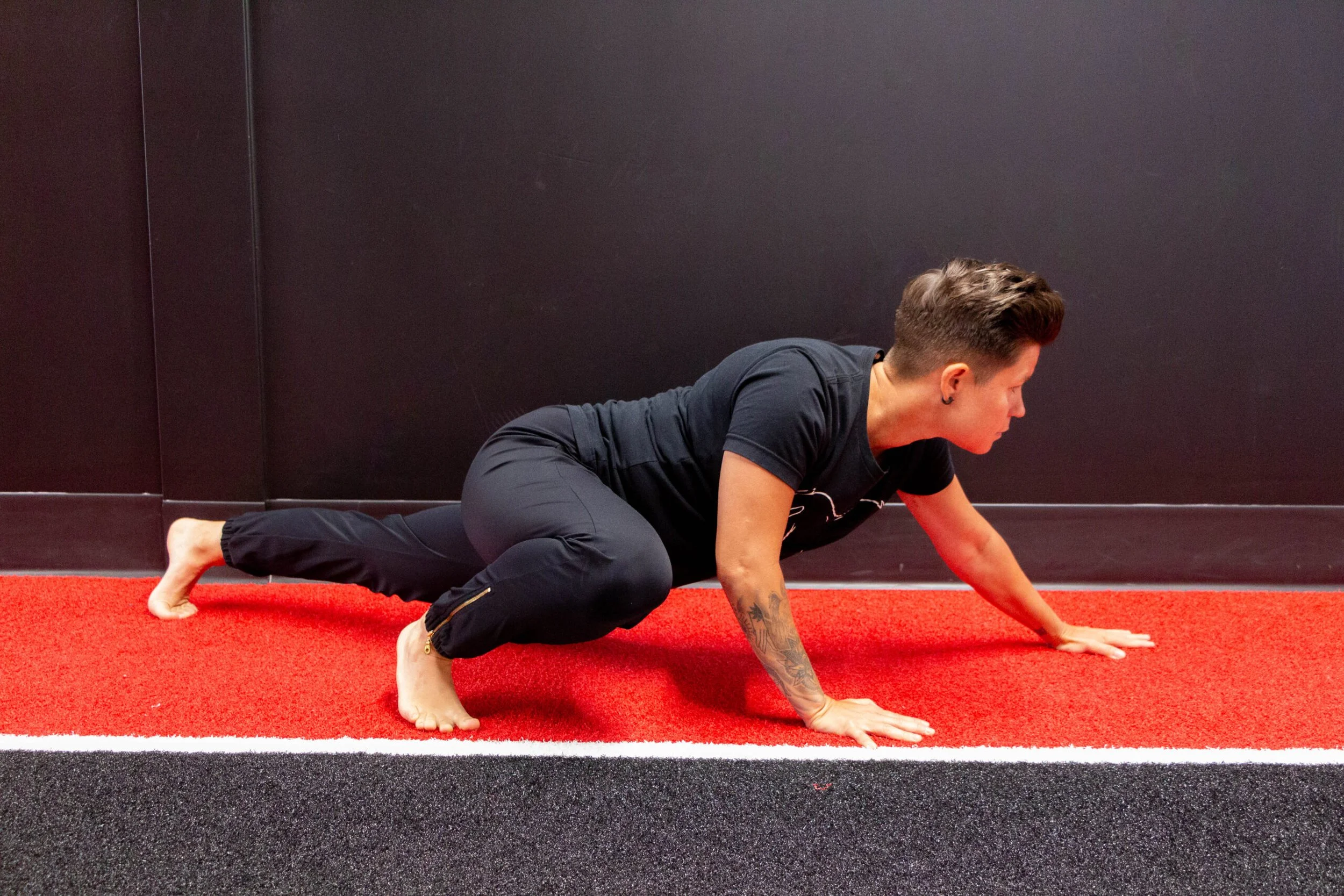
Fascia Maneuvers
A gentle body reset designed to release tension, restore mobility, and help the body return to a more natural state of ease.
Fascia Maneuvers are slow, intentional movements combined with conscious breathing and gentle rotation. Rather than forcing the body, this approach works by allowing tension patterns to gradually unwind. The practice is designed to support the body’s own ability to reorganize, release accumulated stress, and restore a sense of fluid movement.
This is not a workout and it is not traditional stretching. It is a reset experience for the body and nervous system.
Understanding Fascia
Fascia is the connective tissue network that surrounds and supports muscles, bones, nerves, and organs. It forms a continuous web throughout the entire body. When this tissue is healthy, movement feels smooth, coordinated, and light. When fascia becomes tight or restricted, the body may begin to feel stiff, compressed, or uncomfortable.
Daily stress, prolonged sitting, repetitive movement, emotional tension, and physical strain can all influence the fascial system. Over time, the body adapts to these patterns, often leading to sensations of tightness, reduced mobility, and persistent tension.
What Are Fascia Maneuvers?
Fascia Maneuvers are a sequence of gentle, mindful movements designed to support the release of tension stored within the connective tissue system. By combining slow motion with breath and subtle rotation, the body is guided into a state where it can soften defensive holding patterns and regain natural elasticity.
Unlike aggressive techniques, this method respects the body’s limits. The emphasis is on cooperation rather than force.
Why This Feels Different
Traditional stretching often focuses on muscles. Fascia-based movement works with the body’s connective tissue and nervous system. As tension patterns begin to unwind, people frequently notice not only physical changes but also shifts in how they feel internally. The body may feel lighter, more open, more relaxed, or more balanced.
Because fascia is closely linked to the nervous system, releasing physical tension often supports mental and emotional relaxation as well.
What You May Experience
Each session is unique. Some individuals report a deep sense of relaxation, improved ease of movement, and a feeling of spaciousness within the body. Others may notice subtle releases, changes in breathing patterns, or emotional shifts. These responses are considered natural as the body lets go of stored tension.
Potential Benefits
Fascia Maneuvers are commonly used to support greater mobility, reduced tension, improved posture, enhanced body awareness, and nervous system regulation. Many people integrate this practice into their routine as a method of body maintenance, recovery, and stress management.
Who This Is For
This work is suitable for individuals experiencing stiffness, tension, postural strain, stress-related tightness, or movement restrictions. It is also beneficial for those seeking to maintain flexibility, support recovery, or reconnect with their body in a gentle, non-invasive way.
You do not need to be in pain to benefit from fascia work. It is as much about optimization as it is about relief.
The Session Experience
Sessions are calm, guided, and deeply restorative. Movements are performed slowly, with attention to breathing and comfort. There is no forced stretching or aggressive manipulation. The body is supported in releasing tension at its own pace.
